Protagoras
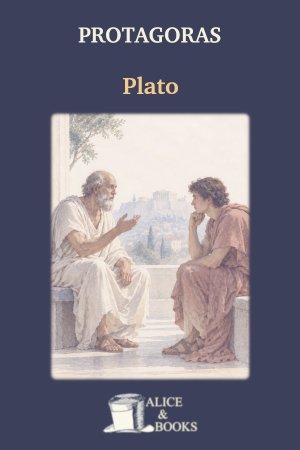
Protagoras is a philosophical dialogue written by Plato, probably composed during the 4th century BC. The work centers on a conversation between Socrates and the famous sophist Protagoras concerning the nature of virtue and whether it can be taught.
The dialogue begins when a young man named Hippocrates asks Socrates to introduce him to Protagoras, hoping to become his student. Socrates questions what exactly he expects to learn, leading to a wider discussion about education, wisdom, and the role of the Sophists in Athenian society.
Protagoras argues that virtue can be taught and supports his position with a celebrated myth about the origins of human society. Socrates challenges him through a series of questions about courage, justice, temperance, wisdom, and piety, examining whether the different virtues are separate qualities or parts of a single form of knowledge.
Through its lively debate and shifting arguments, Protagoras explores morality, knowledge, education, and the search for a virtuous life, while also contrasting the rhetorical methods of the Sophists with Socrates' questioning approach to philosophy.
"COMPANION: Where do you come from, Socrates? And yet I need hardly ask the question, for I know that you have been in chase of the fair Alcibiades. I saw him the day before yesterday; and he had got a beard like a man,—and he is a man, as I may tell you in your ear. But I thought that he was still very charming.
SOCRATES: What of his beard? Are you not of Homer's opinion, who says
'Youth is most charming when the beard first appears'?
And that is now the charm of Alcibiades."
This edition was translated by Benjamin Jowett (1817–1893).
Your download has started
PDF · Protagoras — didn't start? Download again
Also available: PDF · EPUB · Read online
Read it on a Kindle
Download the EPUB and send it with Amazon's Send to Kindle (web, app, or your kindle.com email). Modern Kindles accept EPUB directly — no conversion needed.
On iPhone or iPad
Tap the downloaded file, then "Open in Books". It opens in Apple Books, with your reading progress synced across your devices.
On Android
Open the file with Google Play Books or any EPUB reader (ReadEra, Moon+ Reader). PDFs open in any viewer.
On your computer
PDFs open anywhere. For EPUB, try Calibre or Thorium Reader — both free and excellent.
Public domain (US)·No sign-up·DRM-free·Real text, not scans
Copyright note. Protagoras by Plato is believed to be in the public domain in the United States only. It may still be copyrighted in other countries. If you are not in the United States, please check your local laws to ensure this eBook is in the public domain in your country before downloading Protagoras in PDF or EPUB.
- Reading time
- 2 hours 21 minutes
- Pace
- intermediate
- First published
- -385
- Language
- Ancient Greek
Share this book
About the author
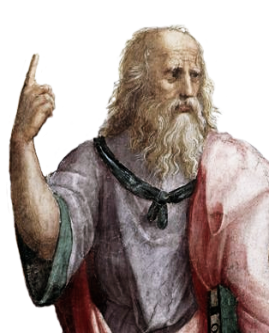
Plato
Dialogues that teach thinking; reason, myth, and civic life explored in living talk.