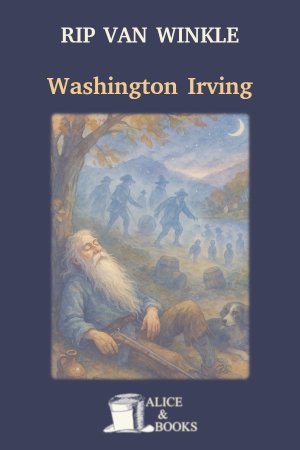
Rip van Winkle
Rip Van Winkle is a short story by Washington Irving, first published in 1819 as part of The Sketch Book of Geoffrey Crayon, Gent.
In a quiet Hudson Valley village on the eve of the Revolution, a kindly but weary villager wanders into the Catskills and encounters mysterious revelers. He drinks, falls into a twenty-year enchanted sleep, and awakens to a world that has moved on without him.
Returning to town, he finds unfamiliar faces, new flags, and old certainties gone. The war has come and gone, and his former life is a rumor. Irving turns this homecoming into the shock of waking to a changed nation and a meditation on time, identity, and memory.
Blending folklore with gentle satire, the tale offers a wry portrait of tradition colliding with change. Its vivid setting and simple premise have made it an enduring piece of early American mythology—a reminder that sleep, like history, can rewrite the terms of a life.
"Whoever has made a voyage up the Hudson must remember the Kaatskill mountains. They are a dismembered branch of the great Appalachian family, and are seen away to the west of the river, swelling up to a noble height, and lording it over the surrounding country..."
Your download has started
PDF · Rip van Winkle — didn't start? Download again
Also available: PDF · EPUB · Read online
Read it on a Kindle
Download the EPUB and send it with Amazon's Send to Kindle (web, app, or your kindle.com email). Modern Kindles accept EPUB directly — no conversion needed.
On iPhone or iPad
Tap the downloaded file, then "Open in Books". It opens in Apple Books, with your reading progress synced across your devices.
On Android
Open the file with Google Play Books or any EPUB reader (ReadEra, Moon+ Reader). PDFs open in any viewer.
On your computer
PDFs open anywhere. For EPUB, try Calibre or Thorium Reader — both free and excellent.
Public domain (US)·No sign-up·DRM-free·Real text, not scans
Copyright note. Rip van Winkle by Washington Irving is believed to be in the public domain in the United States only. It may still be copyrighted in other countries. If you are not in the United States, please check your local laws to ensure this eBook is in the public domain in your country before downloading Rip van Winkle in PDF or EPUB.
- Pages
- 58
- Reading time
- 38 minutes
- Pace
- Intermediate
- First published
- 1819
- Language
- English
207 years later, still timely
Why Read Rip van Winkle in 2026?
A gentle nap becomes a national clock. Irving blends folklore, landscape painting, and comic patience to show how a village changes while one man drifts in mountain air. The prose is musical without fuss, the mood companionable, and the magic light enough to keep the human scale near.
Today's connection
Read it as a mirror for rapid change: technology, norms, slogans that arrive overnight. It comforts and provokes, asking what endures when everything else updates, and how to rejoin a world that moved on without you.
Time and change
Personal pause, public revolution.
American pastoral
Mountains, myth, and neighborly comedy.
Folklore craft
A tale that feels told aloud.
Share this book
About the author
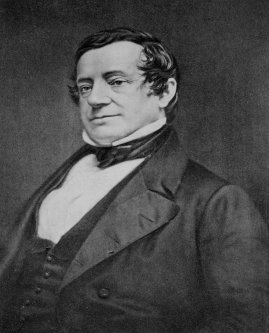
Washington Irving
Folklore, travel, and early American mood with gentle satire and shadow.