Spunk
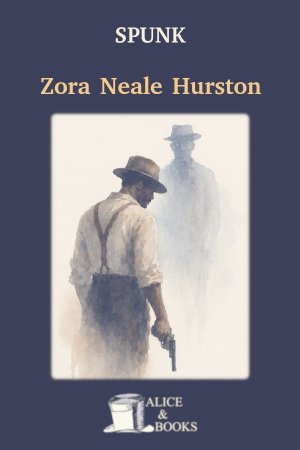
Spunk is a short story written by Zora Neale Hurston and first published in 1925.
The story takes place in a small African American community in Florida and centers on a violent love triangle. Spunk Banks, a confident and intimidating man, openly begins a relationship with Lena Kanty, even though she is married to Joe Kanty.
Humiliated and encouraged by the gossip of the townspeople, Joe finally confronts Spunk with a razor. The encounter ends tragically when Spunk shoots and kills Joe, claiming that he acted in self-defense. Soon afterward, however, Spunk becomes convinced that Joe's spirit has returned to haunt him.
Combining folklore, superstition, and community gossip, Spunk explores jealousy, masculinity, fear, and revenge. Hurston also examines how reputation and collective judgment influence the lives of individuals within a close-knit community.
"A giant of a brown-skinned man sauntered up the one street of the Village and out into the palmetto thickets with a small pretty woman clinging lovingly to his arm.
“Looka theah, folkses!” cried Elijah Mosley, slapping his leg gleefully. “Theah they go, big as life an' brassy as tacks.”"
Your download has started
PDF · Spunk — didn't start? Download again
Also available: PDF · EPUB · Read online
Read it on a Kindle
Download the EPUB and send it with Amazon's Send to Kindle (web, app, or your kindle.com email). Modern Kindles accept EPUB directly — no conversion needed.
On iPhone or iPad
Tap the downloaded file, then "Open in Books". It opens in Apple Books, with your reading progress synced across your devices.
On Android
Open the file with Google Play Books or any EPUB reader (ReadEra, Moon+ Reader). PDFs open in any viewer.
On your computer
PDFs open anywhere. For EPUB, try Calibre or Thorium Reader — both free and excellent.
Public domain (US)·No sign-up·DRM-free·Real text, not scans
Copyright note. Spunk by Zora Neale Hurston is believed to be in the public domain in the United States only. It may still be copyrighted in other countries. If you are not in the United States, please check your local laws to ensure this eBook is in the public domain in your country before downloading Spunk in PDF or EPUB.
- Pages
- 10
- Reading time
- 9 minutes
- Pace
- fast
- First published
- 1925
- Language
- English
101 years later, still timely
Why Read Spunk Today?
A love triangle becomes a village story of swagger, violence, and haunting. Hurston lets conversation carry the action, making public reputation almost as powerful as the people involved.
Today's connection
A compact way to examine how gossip rewards displays of masculinity and turns fear into a shared explanation. Listen for who gets to tell the story.
Community voices
Rumor shapes the unfolding events.
Brittle bravado
Confidence has a frightened underside.
Folkloric unease
The supernatural enters everyday talk.
Share this book
About the author
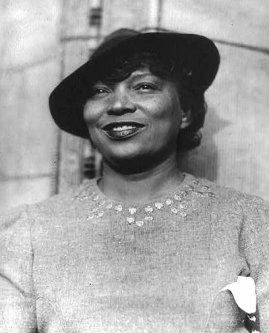
Zora Neale Hurston
Harlem Renaissance voice; folklore and Black Southern life in living vernacular.