
Tales of Unrest
Tales of Unrest is a collection of five short stories by Joseph Conrad, first published in 1898.
Set in locations ranging from the Malay Archipelago and colonial Africa to rural France and London, the stories portray people facing isolation, violence, guilt, and emotional conflict. The collection includes “Karain: A Memory,” “The Idiots,” “An Outpost of Progress,” “The Return,” and “The Lagoon.”
In these tales, personal ambitions and moral weaknesses often lead to betrayal, suffering, or tragedy. Conrad examines the destructive effects of greed and colonial exploitation, as well as the psychological struggles of individuals trapped by fear, memory, and social expectations.
Combining adventure, tragedy, and psychological drama, Tales of Unrest reveals Conrad’s interest in human nature under extreme pressure. The collection offers a dark and powerful exploration of moral uncertainty, cultural conflict, and the consequences of self-deception.
"We knew him in those unprotected days when we were content to hold in our hands our lives and our property. None of us, I believe, has any property now, and I hear that many, negligently, have lost their lives; but I am sure that the few who survive are not yet so dim-eyed as to miss in the befogged respectability of their newspapers the intelligence of various native risings in the Eastern Archipelago. "
Your download has started
PDF · Tales of Unrest — didn't start? Download again
Also available: PDF · EPUB · Read online
Read it on a Kindle
Download the EPUB and send it with Amazon's Send to Kindle (web, app, or your kindle.com email). Modern Kindles accept EPUB directly — no conversion needed.
On iPhone or iPad
Tap the downloaded file, then "Open in Books". It opens in Apple Books, with your reading progress synced across your devices.
On Android
Open the file with Google Play Books or any EPUB reader (ReadEra, Moon+ Reader). PDFs open in any viewer.
On your computer
PDFs open anywhere. For EPUB, try Calibre or Thorium Reader — both free and excellent.
Public domain (US)·No sign-up·DRM-free·Real text, not scans
Copyright note. Tales of Unrest by Joseph Conrad is believed to be in the public domain in the United States only. It may still be copyrighted in other countries. If you are not in the United States, please check your local laws to ensure this eBook is in the public domain in your country before downloading Tales of Unrest in PDF or EPUB.
- Pages
- 155
- Reading time
- 5 hours 17 minutes
- Pace
- intermediate
- First published
- 1898
- Language
- English
128 years later, still timely
Why Read Tales of Unrest in 2026?
Five stories, five pressure chambers: a Malay warrior haunted by memory, two clerks decaying at a colonial outpost, a London marriage cracking open. Early Conrad, already fixed on what fear and self-deception do to people.
Today's connection
Greed dressed up as progress, and the stories people tell to excuse themselves—Conrad's targets haven't aged. A short, sharp entry into his moral world.
Colonial reckoning
Empire without varnish.
Self-deception exposed
The lies people live by.
Early Conrad
His themes taking shape.
Share this book
About the author
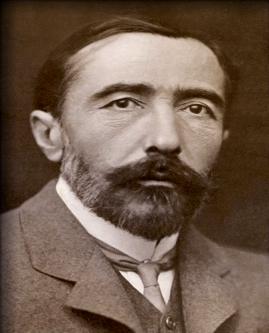
Joseph Conrad
Sea, empire, and conscience in a prose that listens to ambiguity and cost.