
The Devil and Tom Walker
The Devil and Tom Walker is a short story written by Washington Irving and first published in 1824 as part of his collection Tales of a Traveller.
The story follows a greedy and miserly man who lives unhappily with his equally selfish wife near Boston. One day, while taking a shortcut through a dark swamp, he encounters a mysterious figure known as Old Scratch, who offers him access to a hidden treasure in exchange for a terrible bargain.
After initially refusing, Tom eventually accepts the deal and becomes a wealthy moneylender who profits by charging desperate people high interest rates. As he grows older, however, he becomes increasingly afraid of the consequences of his agreement and turns to religion in an attempt to escape the fate he has chosen.
Blending folklore, humor, and supernatural elements, Irving uses the story as a satire on greed, hypocrisy, and materialism. The tale suggests that wealth gained through selfishness and exploitation ultimately brings neither security nor salvation.
"A few miles from Boston in Massachusetts, there is a deep inlet, winding several miles into the interior of the country from Charles Bay, and terminating in a thickly-wooded swamp or morass. On one side of this inlet is a beautiful dark grove; on the opposite side the land rises abruptly from the water's edge into a high ridge, on which grow a few scattered oaks of great age and immense size."
Your download has started
PDF · The Devil and Tom Walker — didn't start? Download again
Also available: PDF · EPUB · Read online
Read it on a Kindle
Download the EPUB and send it with Amazon's Send to Kindle (web, app, or your kindle.com email). Modern Kindles accept EPUB directly — no conversion needed.
On iPhone or iPad
Tap the downloaded file, then "Open in Books". It opens in Apple Books, with your reading progress synced across your devices.
On Android
Open the file with Google Play Books or any EPUB reader (ReadEra, Moon+ Reader). PDFs open in any viewer.
On your computer
PDFs open anywhere. For EPUB, try Calibre or Thorium Reader — both free and excellent.
Public domain (US)·No sign-up·DRM-free·Real text, not scans
Copyright note. The Devil and Tom Walker by Washington Irving is believed to be in the public domain in the United States only. It may still be copyrighted in other countries. If you are not in the United States, please check your local laws to ensure this eBook is in the public domain in your country before downloading The Devil and Tom Walker in PDF or EPUB.
- Pages
- 15
- Reading time
- 24 minutes
- Pace
- intermediate
- First published
- 1824
- Language
- English
202 years later, still timely
Why Read The Devil and Tom Walker Today?
A miser makes a bargain in a swamp and brings its logic into the lending business. Irving blends devil lore with a dry eye for greed and conspicuous piety.
Today's connection
The satire makes exploitation look respectable before exposing its cost. It is a pointed pairing for discussions of money, self-justification, and morality performed in public.
A local devil
Folklore enters the Boston landscape.
Respectable greed
Profit dresses itself as virtue.
Comic menace
The humor never removes the threat.
Share this book
About the author
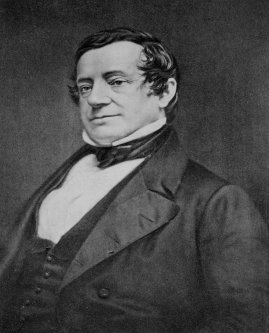
Washington Irving
Folklore, travel, and early American mood with gentle satire and shadow.