The Eternal Husband
The Eternal Husband is a novella by Fyodor Dostoevsky, first published in Russian in 1870. Its uneasy reunion turns jealousy after an affair into psychological comedy, menace, and self-accusation.
Alexei Velchaninov is ill-tempered, sleepless, and increasingly troubled by memories when Pavel Pavlovich Trusotsky appears in St. Petersburg. Pavel is the widower of Natalia, with whom Velchaninov once had an affair, and his uncertain purpose creates a contest of mutual suspicion.
The arrival of Liza, Natalia's neglected young daughter, makes the old triangle a question of paternity and responsibility. Velchaninov tries to rescue her while Pavel alternates between dependence, humiliation, and hostility, placing a child inside adult revenge.
Dostoevsky keeps both men morally unstable: seducer and betrayed husband recognize themselves through rivalry yet continue performing their familiar roles. The title names marriage as a repeated identity, while the narrative tests whether shame can produce care rather than another act of violence.
"Summer had come, and Velchaninoff, contrary to his expectations, was still in St. Petersburg. His trip to the south of Russia had fallen through, and there seemed no end to the business which had detained him. This business—which was a lawsuit as to certain property—had taken a very disagreeable aspect."
This download follows Frederick Whishaw's English translation, published in London in 1888.
Your download has started
PDF · The Eternal Husband — didn't start? Download again
Also available: PDF · EPUB · Read online
Read it on a Kindle
Download the EPUB and send it with Amazon's Send to Kindle (web, app, or your kindle.com email). Modern Kindles accept EPUB directly — no conversion needed.
On iPhone or iPad
Tap the downloaded file, then "Open in Books". It opens in Apple Books, with your reading progress synced across your devices.
On Android
Open the file with Google Play Books or any EPUB reader (ReadEra, Moon+ Reader). PDFs open in any viewer.
On your computer
PDFs open anywhere. For EPUB, try Calibre or Thorium Reader — both free and excellent.
Public domain (US)·No sign-up·DRM-free·Real text, not scans
Copyright note. The Eternal Husband by Fyodor Dostoevsky is believed to be in the public domain in the United States only. It may still be copyrighted in other countries. If you are not in the United States, please check your local laws to ensure this eBook is in the public domain in your country before downloading The Eternal Husband in PDF or EPUB.
- Pages
- 177
- Reading time
- 4 hours 2 minutes
- Pace
- Intermediate
- First published
- 1888
- Language
- Russian
- Downloads
- 2,721
138 years later, still timely
Why Read The Eternal Husband in 2026?
A widower confronts his wife’s former lover; guilt and obsession circle like chess pieces. Dostoevsky condenses humiliation, pride, and self-deception into a tense cat-and-mouse.
Today's connection
Short, unsettling, and perfect for discussions of masculinity, marriage, and the traps we set for ourselves.
Self-deception
Seeing and refusing to see.
Moral unease
No tidy verdicts offered.
Subtext duel
What’s meant vs. what’s said.
Share this book
About the author
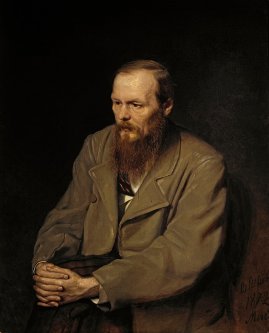
Fyodor Dostoevsky
Psychological depth and moral crisis under pressure; fiction that tests conscience, freedom, and society.