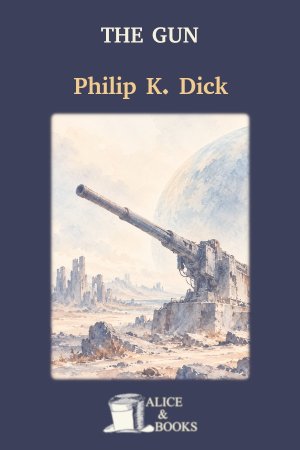
The Gun
The Gun is a science fiction short story by Philip K. Dick, first published in 1952.
The story follows the crew of a spacecraft exploring a distant planet that appears to have been devastated by war. As they approach the surface, their ship is suddenly attacked by a powerful automated weapon that has survived long after the civilization that created it has disappeared.
After landing, the explorers discover that the gun was designed to defend the ruins from any possible threat. Although its original makers are gone, the machine continues to perform its task with deadly precision, forcing the crew to find a way to disable it before they can safely investigate the planet.
Through this encounter, Dick explores the dangers of autonomous weapons and technology that outlives its creators, raising questions about war, destruction, and the consequences of building machines capable of continuing their purpose without human control.
"The Captain peered into the eyepiece of the telescope. He adjusted the focus quickly.
"It was an atomic fission we saw, all right," he said presently. He sighed and pushed the eyepiece away. "Any of you who wants to look may do so. But it's not a pretty sight.""
Your download has started
PDF · The Gun — didn't start? Download again
Also available: PDF · EPUB · Read online
Read it on a Kindle
Download the EPUB and send it with Amazon's Send to Kindle (web, app, or your kindle.com email). Modern Kindles accept EPUB directly — no conversion needed.
On iPhone or iPad
Tap the downloaded file, then "Open in Books". It opens in Apple Books, with your reading progress synced across your devices.
On Android
Open the file with Google Play Books or any EPUB reader (ReadEra, Moon+ Reader). PDFs open in any viewer.
On your computer
PDFs open anywhere. For EPUB, try Calibre or Thorium Reader — both free and excellent.
Public domain (US)·No sign-up·DRM-free·Real text, not scans
Copyright note. The Gun by Philip K. Dick is believed to be in the public domain in the United States only. It may still be copyrighted in other countries. If you are not in the United States, please check your local laws to ensure this eBook is in the public domain in your country before downloading The Gun in PDF or EPUB.
- Reading time
- 24 minutes
- Pace
- intermediate
- First published
- 1952
- Language
- English
74 years later, still timely
Why Read The Gun Today?
Explorers approach a ruined planet and meet a weapon still carrying out its orders. Dick turns a surviving machine into a question about what defense means after the world it served has vanished.
Today's connection
A concise starting point for discussing automated decisions and obsolete instructions. Persistence can become destructive when a system cannot recognize that its purpose has disappeared.
A surviving weapon
The function outlives its makers.
Ruins and machinery
Technology preserves a vanished conflict.
Purpose without judgment
An instruction cannot assess its own value.
Share this book
About the author
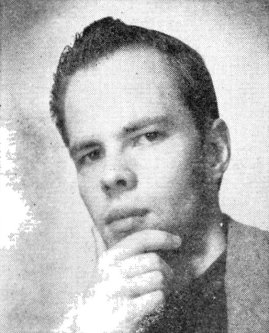
Philip K. Dick
Paranoid humane science fiction that tests reality identity memory and power with wit.