The Man Who Knew Too Much
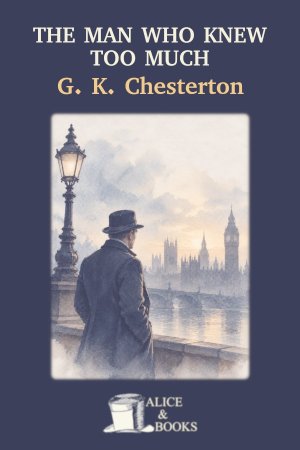
The Man Who Knew Too Much is a collection of detective stories written by British author G. K. Chesterton and published in 1922. The book features eight interconnected mysteries centered on Horne Fisher, an aristocratic amateur detective whose exceptional powers of observation and intimate knowledge of British political society allow him to uncover secrets, crimes, and conspiracies hidden beneath respectable appearances.
Accompanied by his friend Harold March, a journalist with a strong interest in politics and social affairs, Fisher investigates a series of puzzling incidents involving mysterious deaths, disappearances, political intrigue, and apparent impossibilities. From an unexpected murder on a country estate to strange events surrounding influential public figures, each case challenges conventional explanations and reveals the complicated relationships between personal ambition, power, and justice.
Combining ingenious mysteries with Chesterton's characteristic wit, paradoxes, and philosophical reflections, The Man Who Knew Too Much offers a sharp critique of political corruption, social privilege, and the moral compromises of those in power. Through its unconventional detective and often bittersweet conclusions, the collection explores the burden of knowledge and the uneasy relationship between truth and authority.
"Harold March, the rising reviewer and social critic, was walking vigorously across a great tableland of moors and commons, the horizon of which was fringed with the far-off woods of the famous estate of Torwood Park. He was a good-looking young man in tweeds, with very pale curly hair and pale clear eyes. "
Your download has started
PDF · The Man Who Knew Too Much — didn't start? Download again
Also available: PDF · EPUB · Read online
Read it on a Kindle
Download the EPUB and send it with Amazon's Send to Kindle (web, app, or your kindle.com email). Modern Kindles accept EPUB directly — no conversion needed.
On iPhone or iPad
Tap the downloaded file, then "Open in Books". It opens in Apple Books, with your reading progress synced across your devices.
On Android
Open the file with Google Play Books or any EPUB reader (ReadEra, Moon+ Reader). PDFs open in any viewer.
On your computer
PDFs open anywhere. For EPUB, try Calibre or Thorium Reader — both free and excellent.
Public domain (US)·No sign-up·DRM-free·Real text, not scans
Copyright note. The Man Who Knew Too Much by G. K. Chesterton is believed to be in the public domain in the United States only. It may still be copyrighted in other countries. If you are not in the United States, please check your local laws to ensure this eBook is in the public domain in your country before downloading The Man Who Knew Too Much in PDF or EPUB.
- Reading time
- 5 hours 2 minutes
- Pace
- intermediate
- First published
- 1922
- Language
- English
Share this book
About the author
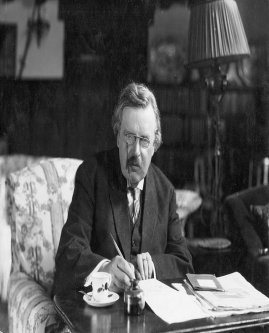
G. K. Chesterton
Paradox as flashlight; essays, fables, and mysteries that defend sanity with play.