The Mystery of Marie Rogêt
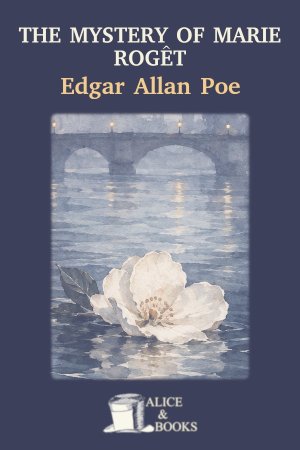
The Mystery of Marie Rogêt is a detective short story written by Edgar Allan Poe and first published in 1842. It is the second story featuring the detective C. Auguste Dupin, following The Murders in the Rue Morgue.
The story begins when a young Parisian woman, Marie Rogêt, mysteriously disappears and is later found dead in the Seine River. With the police unable to solve the crime, Dupin studies newspaper reports and the available evidence, questioning the many theories surrounding her death.
Rather than relying on physical investigation, Dupin uses careful reasoning and detailed analysis to identify contradictions in the popular explanations of the case. His examination suggests that the truth may be very different from what the newspapers and public believe.
Poe based the story on the real-life murder of Mary Cecilia Rogers in New York City. By transferring the events to Paris, he created a work that combines detective fiction with an analysis of an actual unsolved crime, exploring the unreliability of public opinion, journalism, and circumstantial evidence.
"There are few persons, even among the calmest thinkers, who have not occasionally been startled into a vague yet thrilling half-credence in the supernatural, by coincidences of so seemingly marvellous a character that, as mere coincidences, the intellect has been unable to receive them. "
Your download has started
PDF · The Mystery of Marie Rogêt — didn't start? Download again
Also available: PDF · EPUB · Read online
Read it on a Kindle
Download the EPUB and send it with Amazon's Send to Kindle (web, app, or your kindle.com email). Modern Kindles accept EPUB directly — no conversion needed.
On iPhone or iPad
Tap the downloaded file, then "Open in Books". It opens in Apple Books, with your reading progress synced across your devices.
On Android
Open the file with Google Play Books or any EPUB reader (ReadEra, Moon+ Reader). PDFs open in any viewer.
On your computer
PDFs open anywhere. For EPUB, try Calibre or Thorium Reader — both free and excellent.
Public domain (US)·No sign-up·DRM-free·Real text, not scans
Copyright note. The Mystery of Marie Rogêt by Edgar Allan Poe is believed to be in the public domain in the United States only. It may still be copyrighted in other countries. If you are not in the United States, please check your local laws to ensure this eBook is in the public domain in your country before downloading The Mystery of Marie Rogêt in PDF or EPUB.
- Reading time
- 1 hour 42 minutes
- Pace
- intermediate
- First published
- 1842
- Language
- English
184 years later, still timely
Why Read The Mystery of Marie Rogêt Today?
Dupin studies a woman's death through competing newspaper reports. Poe makes reading itself the investigation, exposing how repeated assumptions can acquire the appearance of independently established facts.
Today's connection
A revealing companion to true-crime discussion. Follow the difference between what a report observes, what it infers, and what later accounts merely repeat.
Detection through print
The evidence arrives as published language.
Competing explanations
Plausibility needs careful testing.
An actual case transformed
Fiction reframes a real investigation.
Share this book
About the author

Edgar Allan Poe
Precision of mood and method that invents detective logic and the claustrophobia of obsession.