The Secret of Father Brown
The Secret of Father Brown is a collection of ten detective stories written by G. K. Chesterton and first published in 1927.
The book follows Father Brown, an unassuming Catholic priest with an extraordinary understanding of human nature. Rather than relying on scientific evidence alone, he solves seemingly impossible crimes by examining the motives, fears, and moral weaknesses of the suspects.
Across the collection, Father Brown investigates mysterious deaths, stolen treasures, deceptive alibis, and crimes surrounded by supernatural appearances. Each case reveals how ordinary facts can be hidden beneath illusion, prejudice, and clever misdirection.
A framing story also explains the secret behind the priest’s remarkable method: he imagines himself capable of committing each crime in order to understand the criminal’s mind. Blending mystery, humor, and philosophy, the collection explores guilt, justice, repentance, and the complexity of good and evil.
"JAMES BAGSHAW and Wilfred Underhill were old friends, and were fond of rambling through the streets at night, talking interminably as they turned corner after corner in the silent and seemingly lifeless labyrinth of the large suburb in which they lived. "
Your download has started
PDF · The Secret of Father Brown — didn't start? Download again
Also available: PDF · EPUB · Read online
Read it on a Kindle
Download the EPUB and send it with Amazon's Send to Kindle (web, app, or your kindle.com email). Modern Kindles accept EPUB directly — no conversion needed.
On iPhone or iPad
Tap the downloaded file, then "Open in Books". It opens in Apple Books, with your reading progress synced across your devices.
On Android
Open the file with Google Play Books or any EPUB reader (ReadEra, Moon+ Reader). PDFs open in any viewer.
On your computer
PDFs open anywhere. For EPUB, try Calibre or Thorium Reader — both free and excellent.
Public domain (US)·No sign-up·DRM-free·Real text, not scans
Copyright note. The Secret of Father Brown by G. K. Chesterton is believed to be in the public domain in the United States only. It may still be copyrighted in other countries. If you are not in the United States, please check your local laws to ensure this eBook is in the public domain in your country before downloading The Secret of Father Brown in PDF or EPUB.
- Pages
- 166
- Reading time
- 5 hours 18 minutes
- Pace
- intermediate
- First published
- 1927
- Language
- English
99 years later, still timely
Why Read The Secret of Father Brown in 2026?
Chesterton's priest-detective solves crimes not with a magnifying glass but with moral imagination: he thinks his way into the criminal's mind until the impossible turns ordinary. A framing story finally explains the method behind the modest exterior.
Today's connection
In a culture fond of data and profiling, Father Brown's insistence that understanding people beats cataloguing evidence feels quietly radical. Empathy, here, is an investigative tool.
Through illusion
Appearance versus reality.
Empathy as method
Entering the criminal's mind.
Wit and paradox
Philosophy hidden in puzzles.
Share this book
About the author
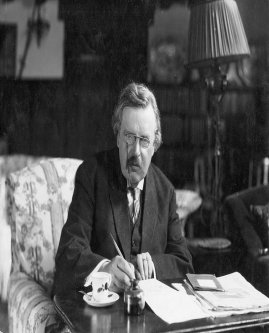
G. K. Chesterton
Paradox as flashlight; essays, fables, and mysteries that defend sanity with play.