The Story-Teller
The Story-Teller is a short story written by Saki (H. H. Munro) and first published in 1914.
The story takes place in a railway carriage, where an aunt is traveling with three restless children. After her attempts to entertain them with a dull moral tale fail, a fellow passenger decides to tell them a story of his own, creating a far more unusual and captivating tale.
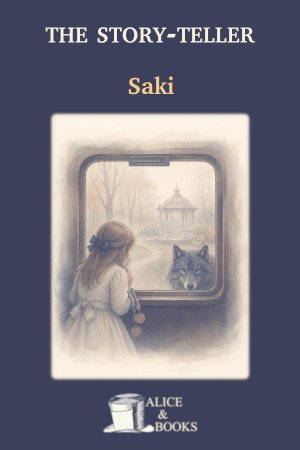
His story concerns an extremely well-behaved little girl who is rewarded for her goodness with a visit to a beautiful park. There, however, she encounters a wolf, and the medals she has received for good behavior betray her hiding place and lead to a shocking ending.
The children are delighted, but their aunt is horrified by what she considers an improper story. Through its dark humor, The Story-Teller satirizes conventional moral lessons and unimaginative approaches to teaching children, suggesting that a memorable story can be more powerful than a predictable one.
"It was a hot afternoon, and the railway carriage was correspondingly sultry, and the next stop was at Templecombe, nearly an hour ahead. The occupants of the carriage were a small girl, and a smaller girl, and a small boy."
Your download has started
PDF · The Story-Teller — didn't start? Download again
Also available: PDF · EPUB · Read online
Read it on a Kindle
Download the EPUB and send it with Amazon's Send to Kindle (web, app, or your kindle.com email). Modern Kindles accept EPUB directly — no conversion needed.
On iPhone or iPad
Tap the downloaded file, then "Open in Books". It opens in Apple Books, with your reading progress synced across your devices.
On Android
Open the file with Google Play Books or any EPUB reader (ReadEra, Moon+ Reader). PDFs open in any viewer.
On your computer
PDFs open anywhere. For EPUB, try Calibre or Thorium Reader — both free and excellent.
Public domain (US)·No sign-up·DRM-free·Real text, not scans
Copyright note. The Story-Teller by Saki is believed to be in the public domain in the United States only. It may still be copyrighted in other countries. If you are not in the United States, please check your local laws to ensure this eBook is in the public domain in your country before downloading The Story-Teller in PDF or EPUB.
- Pages
- 9
- Reading time
- 10 minutes
- Pace
- fast
- First published
- 1914
- Language
- English
112 years later, still timely
Why Read The Story-Teller Today?
An aunt's improving story fails to quiet three children on a train. A fellow passenger offers something less wholesome and far more gripping, letting Saki test what makes a tale work.
Today's connection
Useful for talking about children's reading without assuming that a good lesson makes a good story. Suspense and surprise have claims of their own.
Stories in competition
Two narrators face one audience.
Moral certainty tested
Good behavior cannot control a plot.
Mischievous craft
The telling is the argument.
Share this book
About the author
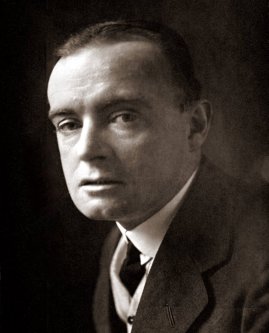
Saki
Edwardian drawing rooms sabotaged by wit; short stories that end like traps.