The Variable Man
The Variable Man is a science fiction novella by Philip K. Dick, first published in 1953.
Set in a tense future where Earth edges toward war with a rival star empire, leaders rely on forecasting computers to choose each move. Their strategy hinges on a secret superweapon, and every calculation assumes a controlled, predictable world until a man from the past suddenly appears and breaks the math
Catapulted forward from the early 20th century, this self-taught fixer sees machines differently from the future’s specialists. His improvisational skills and refusal to follow protocols make him the wild variable that models can’t contain. As he tinkers with the prototype weapon, his unexpected breakthroughs overturn carefully plotted timelines and force a reckoning with the dangers of preemptive war.
Fast-paced and idea-rich, the story explores the limits of technological prediction, the value of human ingenuity, and the cost of placing policy in the hands of algorithms. In classic Dick fashion, it asks whether free will can outmaneuver systems built to control it.
"He fixed things—clocks, refrigerators, vidsenders and destinies. But he had no business in the future, where the calculators could not handle him. He was Earth’s only hope—and its sure failure!"
Your download has started
PDF · The Variable Man — didn't start? Download again
Also available: PDF · EPUB · Read online
Read it on a Kindle
Download the EPUB and send it with Amazon's Send to Kindle (web, app, or your kindle.com email). Modern Kindles accept EPUB directly — no conversion needed.
On iPhone or iPad
Tap the downloaded file, then "Open in Books". It opens in Apple Books, with your reading progress synced across your devices.
On Android
Open the file with Google Play Books or any EPUB reader (ReadEra, Moon+ Reader). PDFs open in any viewer.
On your computer
PDFs open anywhere. For EPUB, try Calibre or Thorium Reader — both free and excellent.
Public domain (US)·No sign-up·DRM-free·Real text, not scans
Copyright note. The Variable Man by Philip K. Dick is believed to be in the public domain in the United States only. It may still be copyrighted in other countries. If you are not in the United States, please check your local laws to ensure this eBook is in the public domain in your country before downloading The Variable Man in PDF or EPUB.
- Pages
- 87
- Reading time
- 2 hours 6 minutes
- Pace
- Intermediate
- First published
- 1953
- Language
- English
73 years later, still timely
Why Read The Variable Man in 2026?
Dick imagines a predictive bureaucracy certain of its models until a human wildcard scrambles the board. A fixer from another era lands in a technocratic future and exposes how certainty becomes a weapon. The pace is pulpy and propulsive, yet the questions are durable: what happens when forecasts become policy, and error bars shrink to zero in the name of safety?
Today's connection
Read it as a parable for AI governance, risk dashboards, and preemptive decisions. It sharpens skepticism about prediction markets for human lives and defends creativity, improvisation, and the stubborn surprise of hands-on skill.
The human wildcard
Ingenuity beats closed systems.
Ethics of prediction
When forecasts become force.
Future shock
Fast plot, lasting questions.
Share this book
About the author
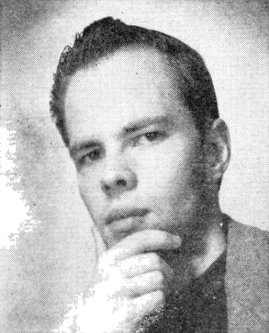
Philip K. Dick
Paranoid humane science fiction that tests reality identity memory and power with wit.