Twice-told tales
Twice-told tales is a short story collection written by Nathaniel Hawthorne and first published in 1837.
This collection showcases Hawthorne's ability to weave together stories that combine the historical, the supernatural, and the moral.
Each story often contains a moral or philosophical message, reflecting Hawthorne's interest in the complexities of human nature and moral dilemmas. Here is a brief summary of some of the more prominent stories in the collection:
- "The Grey Champion": Set in colonial New England, this story tells of an old man who appears out of nowhere to confront a tyrannical government official, symbolizing the spirit of resistance to tyranny.
- "Sunday at Home": A contemplative piece about a quiet Sunday, exploring themes of loneliness and the inner life.
- "The Wedding Bell": A dark story about a wedding in which the groom is a widower and the bride a widow, both elderly, with a story that makes the marriage seem almost grotesque.
- "The Minister's Black Veil": One of Hawthorne's most famous stories, it tells the story of a minister who suddenly starts wearing a black veil and the effect it has on his congregation and himself.
- "The May of Merry Mount": A story that contrasts the Puritans with the more free-spirited members of the colony, centered on a May Day celebration.
- "The Hollow of the Three Hills": A supernatural tale of a woman who seeks knowledge of her distant family through the powers of a witch, only to hear tragic news.
- "Dr. Heidegger's Experiment":A story about an eccentric doctor who claims to have discovered the elixir of life and tests it on four elderly friends.
- "Legends of Province House": A series of stories about Boston's old Province House, each revealing a different historical and supernatural aspect of the building.
- "Young Goodman Brown": Perhaps the most famous story in the collection, it follows a young Puritan who encounters a strange satanic ceremony in the woods that causes him to question the righteousness of his community.
The stories in Twice-Told Tales are rich in symbolism and allegory, often exploring themes of guilt, punishment, and the conflict between good and evil. Hawthorne's use of historical settings and his deep understanding of human nature make these stories compelling and thought-provoking.
"There is a certain church, in the city of New York which I have always regarded with peculiar interest on account of a marriage there solemnized under very singular circumstances in my grandmother’s girlhood. That venerable lady chanced to be a spectator of the scene, and ever after made it her favorite narrative. Whether the edifice now standing on the same site be the identical one to which she referred I am not antiquarian enough to know, nor would it be worth while to correct myself, perhaps, of an agreeable error by reading the date of its erection on the tablet over the door."
Your download has started
PDF · Twice-told tales — didn't start? Download again
Also available: PDF · EPUB · Read online
Read it on a Kindle
Download the EPUB and send it with Amazon's Send to Kindle (web, app, or your kindle.com email). Modern Kindles accept EPUB directly — no conversion needed.
On iPhone or iPad
Tap the downloaded file, then "Open in Books". It opens in Apple Books, with your reading progress synced across your devices.
On Android
Open the file with Google Play Books or any EPUB reader (ReadEra, Moon+ Reader). PDFs open in any viewer.
On your computer
PDFs open anywhere. For EPUB, try Calibre or Thorium Reader — both free and excellent.
Public domain (US)·No sign-up·DRM-free·Real text, not scans
Copyright note. Twice-told tales by Nathaniel Hawthorne is believed to be in the public domain in the United States only. It may still be copyrighted in other countries. If you are not in the United States, please check your local laws to ensure this eBook is in the public domain in your country before downloading Twice-told tales in PDF or EPUB.
- Pages
- 400
- Reading time
- 12 hours 22 minutes
- Pace
- Intermediate
- First published
- 1837
- Language
- English
189 years later, still timely
Why Read Twice-told tales in 2026?
Compact New England shadows—guilt, legend, and private conscience rendered in clear, uncanny prose.
Today's connection
Perfect for short, thoughtful reads. Early American anxieties about community and the self echo in crisp plots and lingering images.
Quiet uncanny
Strangeness in broad daylight.
Moral focus
Choices seen without sermon.
Local color
Town greens, mills, and whispers.
Share this book
About the author
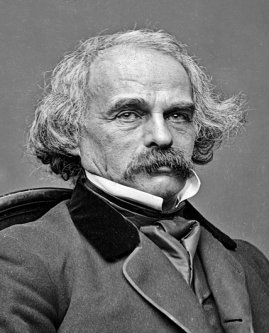
Nathaniel Hawthorne
Moral allegory and New England shadow that test secrecy, shame, and mercy.