Utopia
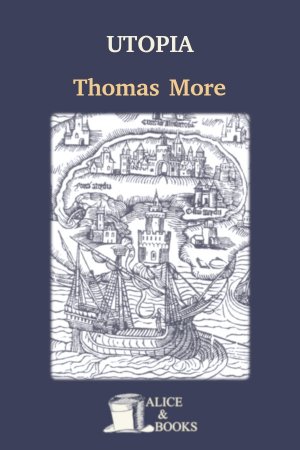
Utopia is a book on political philosophy written by Thomas More in Latin and published in 1516. It is considered one of the most important political texts of its time and one of the creators of the utopian fiction genre.
The book details the report made by a sailor on the island of Utopia, which is organized and has a social order very different from what existed at the time. Utopia means "nowhere" in Greek.
There, all men were equal except the slaves. Private property does not exist, so there is also no greed, need or avarice. All people work for the common good and no ruler is too powerful to impose his will.
This social organization collided head-on with the monarchies of the time in Europe. In fact, it presents some ideas more typical of socialism or communism.
Your download has started
PDF · Utopia — didn't start? Download again
Also available: PDF · EPUB · MOBI · Read online
Read it on a Kindle
Download the EPUB and send it with Amazon's Send to Kindle (web, app, or your kindle.com email). Modern Kindles accept EPUB directly — no conversion needed.
On iPhone or iPad
Tap the downloaded file, then "Open in Books". It opens in Apple Books, with your reading progress synced across your devices.
On Android
Open the file with Google Play Books or any EPUB reader (ReadEra, Moon+ Reader). PDFs open in any viewer.
On your computer
PDFs open anywhere. For EPUB, try Calibre or Thorium Reader — both free and excellent.
Public domain (US)·No sign-up·DRM-free·Real text, not scans
Copyright note. Utopia by Thomas More is believed to be in the public domain in the United States only. It may still be copyrighted in other countries. If you are not in the United States, please check your local laws to ensure this eBook is in the public domain in your country before downloading Utopia in PDF or EPUB.
- Pages
- 108
- Reading time
- 3 hours 39 minutes
- Pace
- Intermediate
- First published
- 1516
- Language
- Latin
- Downloads
- 3,107
510 years later, still timely
Why Read Utopia in 2026?
A traveler describes a flawless island to critique his own world. More turns thought experiment into political satire and civic challenge.
Today's connection
Essential background for debates on work, property, and the common good—an invitation to redesign rather than escape.
Island as mirror
Elsewhere reflects here.
Justice imagined
Institutions under the lamp.
Design thinking
Policies as prototypes.
These collections include Utopia



Share this book
About the author

Thomas More
Utopia as a question; law work and fairness tested by design not wish.