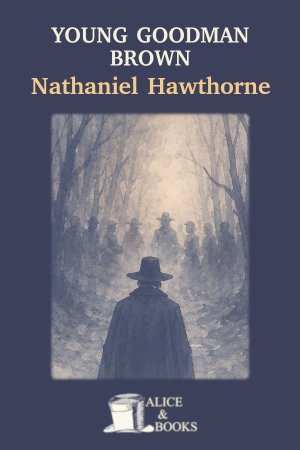
Young Goodman Brown
Young Goodman Brown is a short story written by Nathaniel Hawthorne and first published in 1835. Set in Puritan New England, it explores faith, temptation, and the hidden darkness of human nature.
The story follows Goodman Brown, a young man who leaves his wife, Faith, for a mysterious nighttime journey into the forest. There he meets a strange traveler who gradually reveals that many supposedly respectable members of the community are involved in secret acts of evil.
As Brown ventures deeper into the woods, he witnesses what appears to be a sinister gathering attended by people he once considered virtuous. The experience causes him to lose his trust in both his religious faith and the people around him, leaving him uncertain whether what he saw was real or only a terrible dream.
After returning to Salem, Brown becomes suspicious, bitter, and isolated for the rest of his life. Through his story, Hawthorne examines the dangers of hypocrisy, moral absolutism, and losing faith in humanity.
"Young Goodman Brown came forth at sunset into the street at Salem village; but put his head back, after crossing the threshold, to exchange a parting kiss with his young wife. And Faith, as the wife was aptly named, thrust her own pretty head into the street, letting the wind play with the pink ribbons of her cap while she called to Goodman Brown."
Your download has started
PDF · Young Goodman Brown — didn't start? Download again
Also available: PDF · EPUB · Read online
Read it on a Kindle
Download the EPUB and send it with Amazon's Send to Kindle (web, app, or your kindle.com email). Modern Kindles accept EPUB directly — no conversion needed.
On iPhone or iPad
Tap the downloaded file, then "Open in Books". It opens in Apple Books, with your reading progress synced across your devices.
On Android
Open the file with Google Play Books or any EPUB reader (ReadEra, Moon+ Reader). PDFs open in any viewer.
On your computer
PDFs open anywhere. For EPUB, try Calibre or Thorium Reader — both free and excellent.
Public domain (US)·No sign-up·DRM-free·Real text, not scans
Copyright note. Young Goodman Brown by Nathaniel Hawthorne is believed to be in the public domain in the United States only. It may still be copyrighted in other countries. If you are not in the United States, please check your local laws to ensure this eBook is in the public domain in your country before downloading Young Goodman Brown in PDF or EPUB.
- Pages
- 17
- Reading time
- 26 minutes
- Pace
- intermediate
- First published
- 1835
- Language
- English
191 years later, still timely
Why Read Young Goodman Brown in 2026?
One night in the forest is enough to undo a life. Hawthorne sends a young Puritan out from Salem into the dark, where every respectable neighbor may be at the devil's gathering—and never lets us know whether any of it was real.
Today's connection
A study in what suspicion does to a person: once you doubt everyone's virtue, nothing looks innocent again. It speaks to any age quick to sort neighbors into saints and hypocrites.
Night journey
Into the dark woods
Dream or real?
Ambiguity does the haunting
Faith on trial
Hypocrisy under Puritan robes
Share this book
About the author
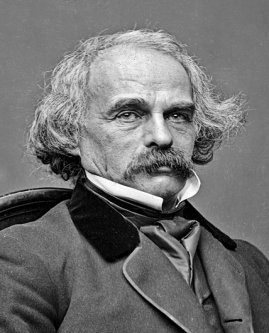
Nathaniel Hawthorne
Moral allegory and New England shadow that test secrecy, shame, and mercy.