A Boy’s Will
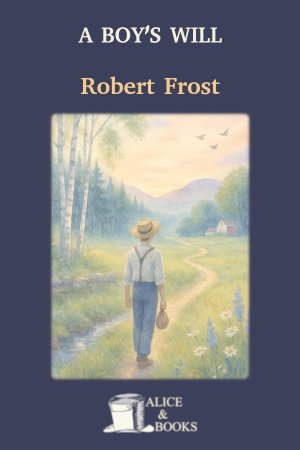
A Boy’s Will is a poetry collection by Robert Frost, first published in 1913.
Written in a clear, musical voice, these early poems trace a young speaker’s journey toward self-discovery and independence. Frost turns to fields, woods, and shifting seasons as companions and mirrors, letting nature serve as a teacher for choices that lie ahead.
The verses move between solitude and sociability, fear and courage, doubt and hard-won conviction. Throughout, Frost explores loneliness and resolve, testing the pull of home against the urge to wander, and discovering how work, memory, and landscape shape a life.
As Frost’s debut, the book offers an early blueprint of his art: traditional forms refreshed with plainspoken insight and startling clarity. It’s a concise, contemplative map of youth learning to trust its own will.
"One of my wishes is that those dark trees,
So old and firm they scarcely show the breeze,
Were not, as 'twere, the merest mask of gloom,
But stretched away unto the edge of doom."
Your download has started
PDF · A Boy’s Will — didn't start? Download again
Also available: PDF · EPUB · Read online
Read it on a Kindle
Download the EPUB and send it with Amazon's Send to Kindle (web, app, or your kindle.com email). Modern Kindles accept EPUB directly — no conversion needed.
On iPhone or iPad
Tap the downloaded file, then "Open in Books". It opens in Apple Books, with your reading progress synced across your devices.
On Android
Open the file with Google Play Books or any EPUB reader (ReadEra, Moon+ Reader). PDFs open in any viewer.
On your computer
PDFs open anywhere. For EPUB, try Calibre or Thorium Reader — both free and excellent.
Public domain (US)·No sign-up·DRM-free·Real text, not scans
Copyright note. A Boy’s Will by Robert Frost is believed to be in the public domain in the United States only. It may still be copyrighted in other countries. If you are not in the United States, please check your local laws to ensure this eBook is in the public domain in your country before downloading A Boy’s Will in PDF or EPUB.
- Pages
- 54
- Reading time
- 29 minutes
- Pace
- Intermediate
- First published
- 1913
- Language
- English
113 years later, still timely
Why Read A Boy’s Will in 2026?
Frost’s debut sketches a young mind testing solitude, duty, and desire against the New England outdoors. The poems move like careful walks: noticing stone, shade, work, and the way choice announces character. The voice is plainspoken but tuned; it does not strain for effect. You hear a life learning cadence and independence, and you leave with a cleaner ear for the ordinary.
Today's connection
In an overstimulated year, these short pieces train attention and steadiness. They reward slow rereads, morning margins, and the habit of taking nature seriously as a teacher of limits and care.
Attention training
Notice more with fewer words.
Plain style
Clarity without ornament.
Roots of a voice
See Frost becoming Frost.
Share this book
About the author
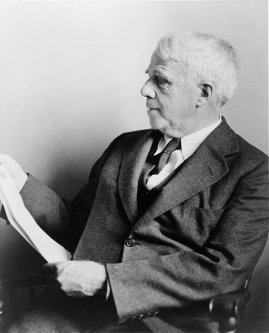
Robert Frost
Plain speech that holds mystery; roads fences and choices turned into lasting music.