Bhagavad Gita
The Bhagavad Gita is a Hindu religious and sacred text of unknown authorship, traditionally attributed to Vyasa, usually dated between the 2nd century B.C. and the 2nd century A.D. It forms part of a much larger work, the epic Mahabharata. It is one of the most relevant religious texts in the world.
The book is a conversation held on a battlefield between the warrior Arjuna and Krishna, his charioteer, friend, and teacher, in the moments before the fighting starts. Seeing his own relatives drawn up in the opposing army, Arjuna lowers his bow and refuses to fight.
The conversation turns on Krishna's answer: on Arjuna's duty as a warrior, on acting without attachment to the fruits of action, and on the paths of knowledge, devotion, and disciplined work. It draws together social, liturgical, and metaphysical strands of the Hindu tradition.
This very ancient text is of vital importance for understanding Indian philosophy and Hinduism.
For this edition of The Bhagavad Gita, the 1885 English translation by Edwin Arnold has been used.
Your download has started
PDF · Bhagavad Gita — didn't start? Download again
Also available: PDF · EPUB · MOBI · Read online
Read it on a Kindle
Download the EPUB and send it with Amazon's Send to Kindle (web, app, or your kindle.com email). Modern Kindles accept EPUB directly — no conversion needed.
On iPhone or iPad
Tap the downloaded file, then "Open in Books". It opens in Apple Books, with your reading progress synced across your devices.
On Android
Open the file with Google Play Books or any EPUB reader (ReadEra, Moon+ Reader). PDFs open in any viewer.
On your computer
PDFs open anywhere. For EPUB, try Calibre or Thorium Reader — both free and excellent.
Public domain (US)·No sign-up·DRM-free·Real text, not scans
Copyright note. Bhagavad Gita by Vyasa is believed to be in the public domain in the United States only. It may still be copyrighted in other countries. If you are not in the United States, please check your local laws to ensure this eBook is in the public domain in your country before downloading Bhagavad Gita in PDF or EPUB.
- Pages
- 98
- Reading time
- 1 hour 40 minutes
- Pace
- Intermediate
- First published
- -300
- Language
- Sanskrit
- Downloads
- 5,787
2326 years later, still timely
Why Read Bhagavad Gita in 2026?
On a battlefield, a warrior freezes; a charioteer teaches duty, vision, and calm. Philosophy in dialogue—portable, profound.
Today's connection
Use it as a guide to action without panic: align roles with conscience, practice steady attention, and act without clinging to outcomes. Read multiple translations; discuss respectfully across traditions.
Duty and conscience
When roles conflict, clarity comes from principle plus compassion.
Yoga as discipline
Paths of action, knowledge, and devotion as integrated practice.
Seeing truly
Perspective shifts shrink fear and sharpen purpose.
These collections include Bhagavad Gita



Share this book
About the author
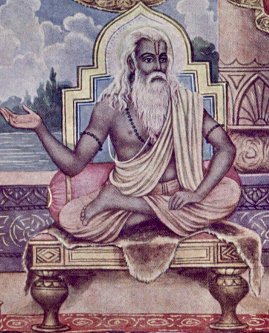
Vyasa
Epic of duty and fate; many voices test ethics, war, kinship, and judgment across generations.