Hippolytus and the Bacchae
Hippolytus and The Bacchae brings together two of Euripides’ most striking Athenian tragedies from the fifth century BCE.
In Hippolytus, a chaste youth’s devotion to one deity provokes another, unleashing a chain of slander, oaths, and fatal misunderstanding. The play probes the collision between restraint and desire, the pressures of honor and shame, and the way a single lie can turn piety into catastrophe.
The Bacchae turns to a city that denies a god and pays the price. As ecstatic rites spread from the mountains to the palace, the drama reveals the clash between civic order and ecstatic faith and the limits of human control before the divine, culminating in a harrowing reckoning.
Together the plays offer a double vision of human vulnerability: one to the storms within, the other to forces beyond reason. Euripides composes tragedies where denial and excess are equally perilous and where the chorus, ritual, and revelation open onto the deepest questions of responsibility and fate.
"Great among men, and not unnamed am I,
The Cyprian, in God's inmost halls on high.
And wheresoe'er from Pontus to the far
Red West men dwell, and see the glad day-star,
And worship Me, the pious heart I bless,
And wreck that life that lives in stubbornness.
For that there is, even in a great God's mind,
That hungereth for the praise of human kind. "
Your download has started
PDF · Hippolytus and the Bacchae — didn't start? Download again
Also available: PDF · EPUB · MOBI · Read online
Read it on a Kindle
Download the EPUB and send it with Amazon's Send to Kindle (web, app, or your kindle.com email). Modern Kindles accept EPUB directly — no conversion needed.
On iPhone or iPad
Tap the downloaded file, then "Open in Books". It opens in Apple Books, with your reading progress synced across your devices.
On Android
Open the file with Google Play Books or any EPUB reader (ReadEra, Moon+ Reader). PDFs open in any viewer.
On your computer
PDFs open anywhere. For EPUB, try Calibre or Thorium Reader — both free and excellent.
Public domain (US)·No sign-up·DRM-free·Real text, not scans
Copyright note. Hippolytus and the Bacchae by Euripides is believed to be in the public domain in the United States only. It may still be copyrighted in other countries. If you are not in the United States, please check your local laws to ensure this eBook is in the public domain in your country before downloading Hippolytus and the Bacchae in PDF or EPUB.
- Pages
- 152
- Reading time
- 2 hours 34 minutes
- Pace
- Intermediate
- First published
- -405
- Language
- Ancient Greek
- Downloads
- 6,249
2431 years later, still timely
Why Read Hippolytus and the Bacchae in 2026?
Two tragedies, two warnings: chastity without mercy destroys; ecstasy without measure devours. Euripides studies desire, piety, and crowd energy with a psychologist’s eye and a poet’s ear. The result is vivid, unsettling, and enduring.
Today's connection
Debates on autonomy, fanaticism, and group frenzy recur. These plays teach boundaries, compassion, and respect for what we do not control.
Limits that save
Measure against extremes.
Desire understood
Feeling neither shamed nor loose.
Stage power
Chorus and shock, balanced.
Share this book
About the author
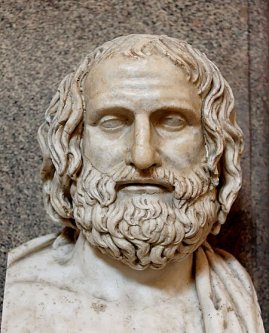
Euripides
Tragedy of sharp psychology that questions gods norms and rage.