Numantia
Numantia is a play written by Miguel de Cervantes and first published in 1585.
This play is very special because it is a dramatic tragedy that tells the story of the resistance and fall of the city of Numantia before the Roman forces.
The story focuses on the struggle of the Numantines against the oppression and military superiority of the Romans.
Therefore, throughout the work, Cervantes will describe the bravery of the citizens as well as the tactics and strategic moves of the Roman general Scipio to subdue and conquer the city.
In this way, the author highlights the resistance of people in the face of adversity and the values and principles of each of them that go beyond their own lives.
"Scipio.
This hard and heavy task, the brunt of which
The Roman Senate gave me to sustain,
Hath brought me stress and toil to such a pitch
As quite unhinges my o'erburdened brain.
A war so long,—in strange events so rich,—
Wherein so many Romans have been slain,
Who dares presume to bring it to a close?
Who would not tremble to renew its woes?
Jugurtha."
Your download has started
PDF · Numantia — didn't start? Download again
Also available: PDF · EPUB · Read online
Read it on a Kindle
Download the EPUB and send it with Amazon's Send to Kindle (web, app, or your kindle.com email). Modern Kindles accept EPUB directly — no conversion needed.
On iPhone or iPad
Tap the downloaded file, then "Open in Books". It opens in Apple Books, with your reading progress synced across your devices.
On Android
Open the file with Google Play Books or any EPUB reader (ReadEra, Moon+ Reader). PDFs open in any viewer.
On your computer
PDFs open anywhere. For EPUB, try Calibre or Thorium Reader — both free and excellent.
Public domain (US)·No sign-up·DRM-free·Real text, not scans
Copyright note. Numantia by Miguel de Cervantes is believed to be in the public domain in the United States only. It may still be copyrighted in other countries. If you are not in the United States, please check your local laws to ensure this eBook is in the public domain in your country before downloading Numantia in PDF or EPUB.
- Pages
- 145
- Reading time
- 2 hours 7 minutes
- Pace
- Slow
- First published
- 1585
- Language
- Spanish
441 years later, still timely
Why Read Numantia in 2026?
A besieged city debates honor, survival, and story. Collective tragedy staged with stark power.
Today's connection
Strong material for conversations on resistance, myth-making, and national memory. Choruses and personified abstractions make the politics visible on stage.
Defiance
Courage measured against ruin.
Civic voice
Community speaks as one.
Costs counted
What survival asks—and leaves.
Share this book
About the author
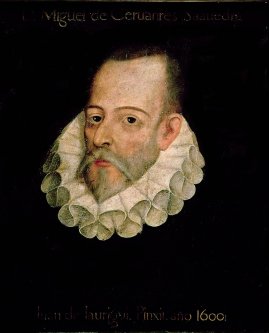
Miguel de Cervantes
Comedy and compassion that invent the modern novel and the problem of reality and role.