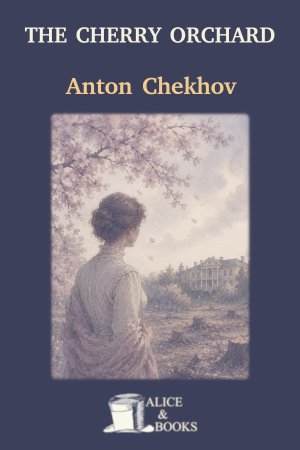
The Cherry Orchard
The Cherry Orchard is a play written by Russian author Anton Chekhov and first performed in 1904.
The story follows landowner Lyubov Ranevskaya as she returns to her family estate after several years abroad. The property, famous for its beautiful cherry orchard, is heavily in debt and faces an approaching public auction.
A wealthy merchant named Lopakhin proposes saving the estate by cutting down the orchard and building summer cottages on the land. However, Ranevskaya and her family remain attached to their memories and social traditions, making them unable to accept the changes necessary for survival.
When the estate is finally sold, the destruction of the cherry orchard symbolizes the end of an aristocratic way of life and the rise of a new social order. The play combines humor and sadness while exploring memory, loss, class, and the human resistance to change.
"A room, which has always been called the nursery. One of the doors leads into Anya’s room. Dawn, sun rises during the scene. May, the cherry trees in flower, but it is cold in the garden with the frost of early morning. Windows closed."
This edition is based on the English translation by Constance Garnett.
Your download has started
PDF · The Cherry Orchard — didn't start? Download again
Also available: PDF · EPUB · Read online
Read it on a Kindle
Download the EPUB and send it with Amazon's Send to Kindle (web, app, or your kindle.com email). Modern Kindles accept EPUB directly — no conversion needed.
On iPhone or iPad
Tap the downloaded file, then "Open in Books". It opens in Apple Books, with your reading progress synced across your devices.
On Android
Open the file with Google Play Books or any EPUB reader (ReadEra, Moon+ Reader). PDFs open in any viewer.
On your computer
PDFs open anywhere. For EPUB, try Calibre or Thorium Reader — both free and excellent.
Public domain (US)·No sign-up·DRM-free·Real text, not scans
Copyright note. The Cherry Orchard by Anton Chekhov is believed to be in the public domain in the United States only. It may still be copyrighted in other countries. If you are not in the United States, please check your local laws to ensure this eBook is in the public domain in your country before downloading The Cherry Orchard in PDF or EPUB.
- Pages
- 61
- Reading time
- 1 hour 30 minutes
- Pace
- slow
- First published
- 1904
- Language
- Russian
122 years later, still timely
Why Read The Cherry Orchard in 2026?
An aristocratic family returns to a beloved estate that debt has pushed to the brink; a merchant offers a rescue plan they cannot bring themselves to accept. Chekhov lets comedy and grief share the stage as the auction approaches and everyone talks past each other.
Today's connection
Anyone watching an old order fade — an industry, a neighborhood, a family way of life — will recognize the mix of nostalgia and paralysis, and the cost of refusing to choose.
Tragicomic stage
Laughter beside loss.
Time running out
A deadline everyone avoids.
Class in motion
Old money meets new.
Share this book
About the author
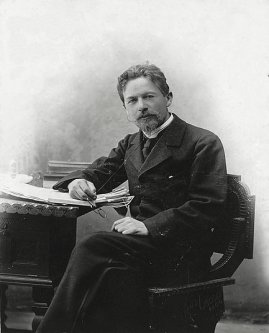
Anton Chekhov
Short forms of human truth; restraint, detail, and sudden light.