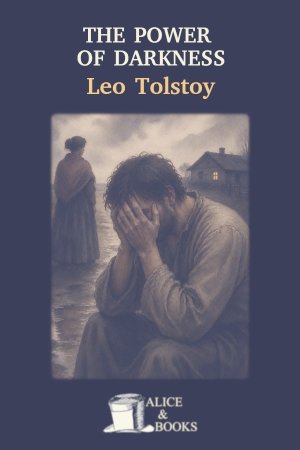
The Power of Darkness
The Power of Darkness is a five-act drama written by Leo Tolstoy in 1886. Set in rural Russia, the play portrays the troubled lives of a peasant family and examines how greed, desire, and moral weakness can lead to terrible consequences.
The story centers on Nikita, a farm laborer who is involved in a secret relationship with Anisya, the wife of his wealthy employer. Their affair leads to deception, poisoning, and murder, drawing Nikita and those around him into an increasingly destructive chain of crimes.
As guilt begins to overwhelm him, Nikita is forced to confront the suffering caused by his actions. Through its stark depiction of poverty and corruption, the play explores the struggle between sin and conscience, while suggesting that confession and repentance may offer a path toward redemption.
"Peter Looking out of the window. The horses have got loose again. If we don’t look out they’ll be killing the colt. Nikíta! Hey, Nikíta! Is the fellow deaf? Listens. To the women. Shut up, one can’t hear anything.
Nikíta From outside. What?
Peter Drive the horses in.
Nikíta We’ll drive ’em in. All in good time."
This edition is based on the English translation by Louise Maude and Aylmer Maude, renowned translators of Tolstoy’s works.
Your download has started
PDF · The Power of Darkness — didn't start? Download again
Also available: PDF · EPUB · Read online
Read it on a Kindle
Download the EPUB and send it with Amazon's Send to Kindle (web, app, or your kindle.com email). Modern Kindles accept EPUB directly — no conversion needed.
On iPhone or iPad
Tap the downloaded file, then "Open in Books". It opens in Apple Books, with your reading progress synced across your devices.
On Android
Open the file with Google Play Books or any EPUB reader (ReadEra, Moon+ Reader). PDFs open in any viewer.
On your computer
PDFs open anywhere. For EPUB, try Calibre or Thorium Reader — both free and excellent.
Public domain (US)·No sign-up·DRM-free·Real text, not scans
Copyright note. The Power of Darkness by Leo Tolstoy is believed to be in the public domain in the United States only. It may still be copyrighted in other countries. If you are not in the United States, please check your local laws to ensure this eBook is in the public domain in your country before downloading The Power of Darkness in PDF or EPUB.
- Pages
- 92
- Reading time
- 2 hours 20 minutes
- Pace
- slow
- First published
- 1887
- Language
- Russian
139 years later, still timely
Why Read The Power of Darkness in 2026?
An affair between a farm laborer and his employer's wife starts a chain of deception and crime that neither can stop. Tolstoy's peasant drama is stark and unsparing, built from the rhythms of village speech — sin shown plainly, with redemption left possible.
Today's connection
It asks how ordinary people slide into the unforgivable — one compromise at a time — and whether conscience can find a way back. Guilt and complicity never go out of date.
Moral darkness
Small sins compounding.
Naturalist drama
Village speech on stage.
Conscience awake
Guilt pressing toward confession.
Share this book
About the author

Leo Tolstoy
Epic realism with intimate ethics; the cadence of daily life turned into vision and care.