The Winter's Tale
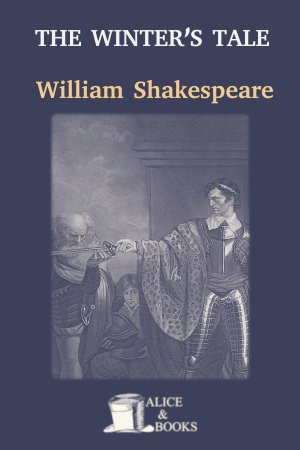
The Winter's Tale is a play by William Shakespeare, first published in 1623.
Leontes, King of Sicily, and Polixenes, King of Bohemia, are friends and enjoy the pleasures of life by socialising and showing affection for each other.
After a stay in Sicily, Polixenes wants to return to his homeland and Leontes tries unsuccessfully to persuade him to stay longer.
When Polixenes refuses, Leontes asks his wife Hermione to try to convince him to stay. She finally succeeds and Leontes, instead of showing joy that his friend remains in the kingdom, begins to believe that Hermione has not only used rhetoric but that she has been unfaithful to him and is having an affair with Polixenes...
The drama revolves around impulsive decisions made in the blindness of jealousy.
"If you shall chance, Camillo, to visit Bohemia, on the like occasion where- on my services are now on foot, you shall see, as I have said, great differ- ence betwixt our Bohemia and your Sicilia."
Your download has started
PDF · The Winter's Tale — didn't start? Download again
Also available: PDF · EPUB · MOBI · Read online
Read it on a Kindle
Download the EPUB and send it with Amazon's Send to Kindle (web, app, or your kindle.com email). Modern Kindles accept EPUB directly — no conversion needed.
On iPhone or iPad
Tap the downloaded file, then "Open in Books". It opens in Apple Books, with your reading progress synced across your devices.
On Android
Open the file with Google Play Books or any EPUB reader (ReadEra, Moon+ Reader). PDFs open in any viewer.
On your computer
PDFs open anywhere. For EPUB, try Calibre or Thorium Reader — both free and excellent.
Public domain (US)·No sign-up·DRM-free·Real text, not scans
Copyright note. The Winter's Tale by William Shakespeare is believed to be in the public domain in the United States only. It may still be copyrighted in other countries. If you are not in the United States, please check your local laws to ensure this eBook is in the public domain in your country before downloading The Winter's Tale in PDF or EPUB.
- Pages
- 130
- Reading time
- 2 hours 12 minutes
- Pace
- Intermediate
- First published
- 1623
- Language
- English
403 years later, still timely
Why Read The Winter’s Tale in 2026?
Jealousy wrecks a kingdom; time restores what pride broke. A tragedy bends into pastoral wonder and forgiveness without losing its scars.
Today's connection
A rare arc from paranoia to repair—timely for discussions on trust, restitution, and renewal.
Sixteen-year hinge
Patience as plot device.
Grace after harm
Reconciliation with memory.
Genres in duet
Dark court, bright country.
Share this book
About the author

William Shakespeare
Electric language and living characters; forms that still teach rhythm, wit, and range.