Galatea
Galatea is a novel written by Miguel de Cervantes and first published in 1585.
This pastoral novel tells the love story between the beautiful shepherdess Galatea and the shepherd Elicio, set in the Spanish countryside during the Renaissance.
It is very curious the way Cervantes describes the main plot and at the same time tells other stories of different shepherds, intertwining the stories and weaving a complex web of tales of unrequited love, jealousy, nobility of spirit and the search for happiness.
All of this is seasoned with wonderful descriptions of the beauty of the rural world of the time and the landscapes, lives and customs of the shepherds.
In addition, Cervantes delights us with profound and philosophical dialogues, offering us a harmonious point of view in the face of the complexities of urban and court life.
"What time unto my sad and mournful cry,
Unto the ill-tuned music of my lyre,
The hill and mead, the plain and stream reply
In bitter echo of my vain desire,
Then take thou, wind, that heedless hastenest by,
The plaints which from my breast, chilled with love's fire,
Issue in my despite, asking in vain
Succour from stream and hill, from mead and plain.
The stream is swollen by the tears which flow
Forth from my wearied eyes: the flowery mead
Blooms with the brambles and the thorns that grow
Into my soul: the lofty hill doth heed
Nowise my sorrows; and the plain below
Of hearing is awearied: in my need
No solace, e'er so small, to assuage my ill
I find in stream or plain, in mead or hill."
This edition of Galatea is based on Herman Oelsner and A. B. Welford's translation.
Your download has started
PDF · Galatea — didn't start? Download again
Also available: PDF · EPUB · Read online
Read it on a Kindle
Download the EPUB and send it with Amazon's Send to Kindle (web, app, or your kindle.com email). Modern Kindles accept EPUB directly — no conversion needed.
On iPhone or iPad
Tap the downloaded file, then "Open in Books". It opens in Apple Books, with your reading progress synced across your devices.
On Android
Open the file with Google Play Books or any EPUB reader (ReadEra, Moon+ Reader). PDFs open in any viewer.
On your computer
PDFs open anywhere. For EPUB, try Calibre or Thorium Reader — both free and excellent.
Public domain (US)·No sign-up·DRM-free·Real text, not scans
Copyright note. Galatea by Miguel de Cervantes is believed to be in the public domain in the United States only. It may still be copyrighted in other countries. If you are not in the United States, please check your local laws to ensure this eBook is in the public domain in your country before downloading Galatea in PDF or EPUB.
- Pages
- 536
- Reading time
- 14 hours 27 minutes
- Pace
- Intermediate
- First published
- 1585
- Language
- Spanish
441 years later, still timely
Why Read Galatea in 2026?
Before Quixote, Cervantes tried a lyrical pastoral of shepherds, poets, and crossed affections. The music of the prose and the mixed forms show an artist testing tools. Fascinating as art and as apprenticeship.
Today's connection
To understand a giant, watch him learn. This novel traces influences behind later satire and novel craft.
Poetic experiment
Forms interlaced.
Pastoral lineage
Desire in open air.
Cervantes in progress
Steps toward greatness.
Share this book
About the author
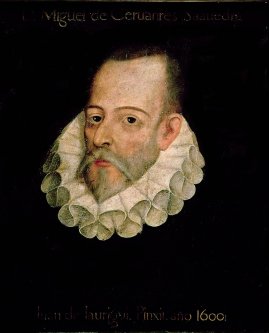
Miguel de Cervantes
Comedy and compassion that invent the modern novel and the problem of reality and role.