The Castle
The Castle is a novel by Franz Kafka, written in the 1920s and published posthumously in 1926.
It follows a land surveyor known only as K., who arrives in a snow-covered village governed by a mysterious castle. From the moment he arrives, he becomes entangled in a bewildering struggle against opaque rules, distant authorities, and endless bureaucratic obstacles.
Throughout the book, K. repeatedly tries to gain official recognition of his position and permission to work, but every step forward leads to new confusions, delays, and contradictions. He is given fragments of information, partial approvals, and shifting instructions that never quite resolve anything. The castle remains an unreachable center of power, always present yet never fully seen or understood.
As K. interacts with villagers, messengers, and minor officials, the novel explores how systems of authority shape people’s lives, often without anyone really knowing who is in control or why the rules exist. Personal relationships, work, and even identity are warped by constant uncertainty and dependence on faceless decisions.
The Castle is often read as an allegory of alienation, bureaucratic power, and the search for meaning in a world that never offers clear answers. Its unfinished, unresolved story reinforces the sense of permanent exclusion and frustrated desire for recognition, making it one of Kafka’s most haunting and influential works.
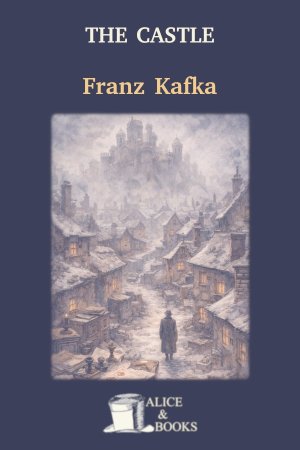
"It was late in the evening when K. arrived. The village was deep in snow. The Castle hill was hidden, veiled in mist and darkness, nor was there even a glimmer of light to show that a castle was there. On the wooden bridge leading from the main road to the village K. stood for a long time gazing into the illusory emptiness above him."
This edition of The Castle is based on Willa Muir and Edwin Muir's translation.
Your download has started
PDF · The Castle — didn't start? Download again
Also available: PDF · EPUB · Read online
Read it on a Kindle
Download the EPUB and send it with Amazon's Send to Kindle (web, app, or your kindle.com email). Modern Kindles accept EPUB directly — no conversion needed.
On iPhone or iPad
Tap the downloaded file, then "Open in Books". It opens in Apple Books, with your reading progress synced across your devices.
On Android
Open the file with Google Play Books or any EPUB reader (ReadEra, Moon+ Reader). PDFs open in any viewer.
On your computer
PDFs open anywhere. For EPUB, try Calibre or Thorium Reader — both free and excellent.
Public domain (US)·No sign-up·DRM-free·Real text, not scans
Copyright note. The Castle by Franz Kafka is believed to be in the public domain in the United States only. It may still be copyrighted in other countries. If you are not in the United States, please check your local laws to ensure this eBook is in the public domain in your country before downloading The Castle in PDF or EPUB.
- Pages
- 233
- Reading time
- 8 hours 39 minutes
- Pace
- Slow
- First published
- 1926
- Language
- German
- Downloads
- 3,212
100 years later, still timely
Why Read The Castle in 2026?
K. arrives in a snowbound village to work as a land surveyor — and spends the novel trying to get anyone official to confirm that he belongs. Kafka renders bureaucracy as weather: pervasive, indifferent, impossible to argue with. Every partial approval opens onto another closed door.
Today's connection
Anyone who has battled an opaque platform, an unreachable authority, or a process that never quite resolves will recognize K. The novel maps power that is everywhere present and nowhere accountable.
Bureaucratic maze
Rules without reasons.
Search for standing
Recognition forever deferred.
Snowbound unease
A village under watch.
Share this book
About the author

Franz Kafka
Bureaucratic nightmares and lucid prose; the comedy of dread that names modern power and anxiety.