The Judgment
The Judgment is a short story written by Franz Kafka in 1912 and first published in 1913.
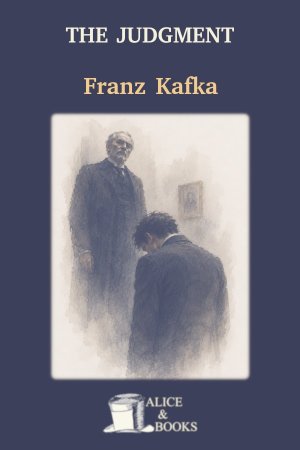
The story centers on a young businessman struggling with his personal relationships. After writing a letter to a friend who lives abroad, he discusses his plans and recent engagement with his elderly father, expecting a relatively ordinary conversation.
Instead, the encounter quickly becomes disturbing as his father accuses him of selfishness and deceit and claims to know more about his distant friend than he has admitted. The confrontation grows increasingly intense until the father pronounces a shocking judgment upon his son, which he accepts with terrifying obedience.
The Judgment explores guilt, family conflict, authority, and psychological oppression. Through its sudden shifts from everyday reality to nightmare-like intensity, the story reflects Kafka's characteristic interest in power, alienation, and irrational condemnation.
"It was a Sunday morning in the loveliest of spring weather. Georg Bendemann, a young businessman, sat in his private room on the second floor of one of the low, flimsily built houses that stretched along the river in a long row, differing from one another hardly at all except in height and color. He had just finished a letter to a childhood friend now living abroad, sealed it with a playful slowness, and then, his elbow propped on the desk, looked out the window at the river, the bridge, and the hills on the far bank with their faint green."
This English translation was produced by AliceAndBooks from the original German text available through Project Gutenberg.
Your download has started
PDF · The Judgment — didn't start? Download again
Also available: PDF · EPUB · Read online
Read it on a Kindle
Download the EPUB and send it with Amazon's Send to Kindle (web, app, or your kindle.com email). Modern Kindles accept EPUB directly — no conversion needed.
On iPhone or iPad
Tap the downloaded file, then "Open in Books". It opens in Apple Books, with your reading progress synced across your devices.
On Android
Open the file with Google Play Books or any EPUB reader (ReadEra, Moon+ Reader). PDFs open in any viewer.
On your computer
PDFs open anywhere. For EPUB, try Calibre or Thorium Reader — both free and excellent.
Public domain (US)·No sign-up·DRM-free·Real text, not scans
Copyright note. The Judgment by Franz Kafka is believed to be in the public domain in the United States only. It may still be copyrighted in other countries. If you are not in the United States, please check your local laws to ensure this eBook is in the public domain in your country before downloading The Judgment in PDF or EPUB.
- Pages
- 14
- Reading time
- 22 minutes
- Pace
- fast
- First published
- 1913
- Language
- German
113 years later, still timely
Why Read The Judgment Today?
A letter to a distant friend leads to a terrifying conversation with a father. Kafka moves from ordinary family business to absolute condemnation without offering a comfortable explanation.
Today's connection
Its abrupt shifts capture how authority can become internal: a parent's judgment may feel binding long after its logic has ceased to make sense.
Domestic nightmare
A familiar room becomes threatening.
Paternal power
Accusation takes the place of argument.
Uncertain ground
Each exchange unsettles the last.
Share this book
About the author

Franz Kafka
Bureaucratic nightmares and lucid prose; the comedy of dread that names modern power and anxiety.