
The Magic Mountain
The Magic Mountain is a novel written by Thomas Mann and first published in 1924.
Hans Castorp, a young German engineer, travels to a Swiss alpine sanatorium for a brief visit that unexpectedly stretches into years. Life at high altitude slows and distorts perception, turning daily routines into a meditation on time, illness, and modernity, where health and sickness trade places in unsettling ways.
Within the closed world of the sanatorium, conversations, lectures, and flirtations become an education. The protagonist is drawn into intellectual duels that pit reason against romantic extremism, inviting him—and the reader—to consider how ideas shape destiny and how comfort can become a trap.
As Europe edges toward catastrophe, the mountain community emerges as a microcosm of a continent on the brink. Mann blends irony, philosophy, and psychological detail to craft a coming-of-age story that doubles as a portrait of a civilization in crisis.
"An unassuming young man was travelling, in midsummer, from his native city of Hamburg to Davos-Platz in the Canton of the Grisons, on a three weeks’ visit.
From Hamburg to Davos is a long journey—too long, indeed, for so brief a stay. It crosses all sorts of country; goes up hill and down dale, descends
from the plateau of Southern Germany to the shore of Lake Constance, over its bounding waves and on across marshes once thought to be bottomless."
This edition of the novel The Magic Mountain uses the English translation by H. T. Lowe-Porter.
Your download has started
PDF · The Magic Mountain — didn't start? Download again
Also available: PDF · EPUB · Read online
Read it on a Kindle
Download the EPUB and send it with Amazon's Send to Kindle (web, app, or your kindle.com email). Modern Kindles accept EPUB directly — no conversion needed.
On iPhone or iPad
Tap the downloaded file, then "Open in Books". It opens in Apple Books, with your reading progress synced across your devices.
On Android
Open the file with Google Play Books or any EPUB reader (ReadEra, Moon+ Reader). PDFs open in any viewer.
On your computer
PDFs open anywhere. For EPUB, try Calibre or Thorium Reader — both free and excellent.
Public domain (US)·No sign-up·DRM-free·Real text, not scans
Copyright note. The Magic Mountain by Thomas Mann is believed to be in the public domain in the United States only. It may still be copyrighted in other countries. If you are not in the United States, please check your local laws to ensure this eBook is in the public domain in your country before downloading The Magic Mountain in PDF or EPUB.
- Pages
- 793
- Reading time
- 27 hours 35 minutes
- Pace
- Slow
- First published
- 1924
- Language
- German
102 years later, still timely
Why Read The Magic Mountain in 2026?
A sanatorium above the clouds becomes a school for time. Mann turns convalescence into a seminar of competing worldviews, where conversation is duel and flirtation, and where days stretch until values change shape. The novel is vast but hospitable: comic set pieces, music of ideas, and a patient education in how climate, routine, and talk alter a life.
Today's connection
After years of lockdowns and polarized news, this book rehabilitates slow attention. It models civil argument, uncertainty with dignity, and the discipline of changing your mind. Reading it is not escape but training in intellectual stamina.
Slow time, deep focus
Feel how duration rewires perception.
Life as seminar
Debate ethics, art, faith, progress.
Human warmth
Irony that still cares for people.
Share this book
About the author
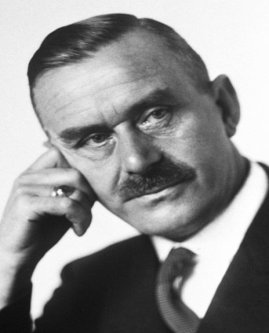
Thomas Mann
Irony myth and psychology in disciplined prose; family art and conscience under pressure.