Victory: An Island Tale
Victory: An Island Tale is a novel written by Joseph Conrad in 1915.
Heyst is a man of Swedish origin, cultured, educated and from a good family. Even so, he is somewhat strange and peculiar. After starting a mining business that failed and of which he was director, he decides to isolate himself on a small Indonesian island and cut off contact with society.
The bankruptcy of the company is not the only reason for such a drastic decision. Some childhood problems along with other unfortunate incidents such as the death of his partner pushed him to make the decision and thus seek a meaning to human existence.
His life goes by quietly, in an environment where he has everything under control, until he decides to introduce a new element: a young violinist.
The novel is about the consequences of isolationism and detachment. The protagonist decides to withdraw from the world but the world actually ends up finding him.
"Some considerable time afterwards—we did not meet very often—I asked Davidson how he had managed about the shawl and heard that he had tackled his mission in a direct way, and had found it easy enough. At the very first call he made in Samarang he rolled the shawl as tightly as he could into the smallest possible brown-paper parcel, which he carried ashore with him. His business in the town being transacted, he got into a gharry with the parcel and drove to the hotel."
Your download has started
PDF · Victory: An Island Tale — didn't start? Download again
Also available: PDF · EPUB · MOBI · Read online
Read it on a Kindle
Download the EPUB and send it with Amazon's Send to Kindle (web, app, or your kindle.com email). Modern Kindles accept EPUB directly — no conversion needed.
On iPhone or iPad
Tap the downloaded file, then "Open in Books". It opens in Apple Books, with your reading progress synced across your devices.
On Android
Open the file with Google Play Books or any EPUB reader (ReadEra, Moon+ Reader). PDFs open in any viewer.
On your computer
PDFs open anywhere. For EPUB, try Calibre or Thorium Reader — both free and excellent.
Public domain (US)·No sign-up·DRM-free·Real text, not scans
Copyright note. Victory: An Island Tale by Joseph Conrad is believed to be in the public domain in the United States only. It may still be copyrighted in other countries. If you are not in the United States, please check your local laws to ensure this eBook is in the public domain in your country before downloading Victory: An Island Tale in PDF or EPUB.
- Pages
- 344
- Reading time
- 9 hours 52 minutes
- Pace
- Intermediate
- First published
- 1915
- Language
- English
111 years later, still timely
Why Read Victory in 2026?
Kindness meets predation on a remote island. Conrad tests idealism against opportunists and asks what responsibility we bear when neutrality shelters harm. It’s tense, gorgeously written, and ethically thorny.
Today's connection
Relevant to bystander dilemmas and the cost of detachment. Hospitality, risk, and courage take the stage in close quarters.
Neutrality on trial
Non-involvement has consequences.
Island crucible
Isolation magnifies choice.
Compassion with risk
Helping as moral wager.
Share this book
About the author
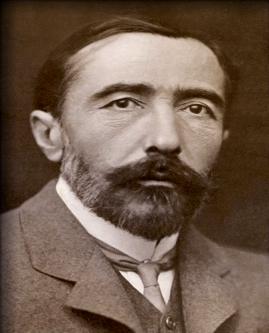
Joseph Conrad
Sea, empire, and conscience in a prose that listens to ambiguity and cost.