Oedipus The King
Oedipus The King, also known as Oedipus Rex or Oedipus Tyrannus, is a Greek tragedy written by Sophocles that was first performed around 429 BC.
Considered the main work of Sophocles, it is one of the most important dramas in the history of Western literature.
The play is based on the Greek myth of Oedipus, king of Thebes, who — without knowing who either of them was — killed his father and married his mother, exactly as the oracle had foretold he would.
Thebes, ruled by Oedipus, is being destroyed by a plague. He sends to the oracle at Delphi, which answers that the city will not be cleansed until the murderer of Laius, the former king, is found, so Oedipus opens an investigation.
The tragedy turns on Oedipus's insistence on the truth, which he keeps pursuing even as the evidence begins to point at him.
This tragedy by Sophocles has stirred emotions for centuries and is still performed today.
Gilbert Murray's translation has been used for this digital edition of the book Oedipus The King
Your download has started
PDF · Oedipus The King — didn't start? Download again
Also available: PDF · EPUB · MOBI · Read online
Read it on a Kindle
Download the EPUB and send it with Amazon's Send to Kindle (web, app, or your kindle.com email). Modern Kindles accept EPUB directly — no conversion needed.
On iPhone or iPad
Tap the downloaded file, then "Open in Books". It opens in Apple Books, with your reading progress synced across your devices.
On Android
Open the file with Google Play Books or any EPUB reader (ReadEra, Moon+ Reader). PDFs open in any viewer.
On your computer
PDFs open anywhere. For EPUB, try Calibre or Thorium Reader — both free and excellent.
Public domain (US)·No sign-up·DRM-free·Real text, not scans
Copyright note. Oedipus The King by Sophocles is believed to be in the public domain in the United States only. It may still be copyrighted in other countries. If you are not in the United States, please check your local laws to ensure this eBook is in the public domain in your country before downloading Oedipus The King in PDF or EPUB.
- Pages
- 47
- Reading time
- 1 hour 36 minutes
- Pace
- Intermediate
- First published
- -429
- Language
- Ancient Greek
- Downloads
- 3,924
2455 years later, still timely
Why Read Oedipus The King in 2026?
Part civic emergency, part moral inquiry, "Oedipus the King" moves like a procedural with a conscience. A leader vows to trace the city's sickness to its cause and will not outsource the truth. In a single evening's reading, the play tests responsibility, certainty, and what we owe the public when answers point inward.
Today's connection
It reads like a masterclass in leadership under pressure: evidence versus certainty, oath versus outcome. The chorus stands in for the city, asking what justice requires now, not later. Public language is measured against real consequences. You leave with a stricter sense of accountability—and of limits.
Truth and responsibility
The play weighs vows, evidence, and consequences without easy absolution. Justice is a practice, not a speech.
Inquiry as action
Witnesses, oracles, and memory form a chain of reasoning. The method matters as much as the verdict.
The city speaks
The chorus is a civic conscience, not background noise. It keeps the crisis public.
Share this book
About the author
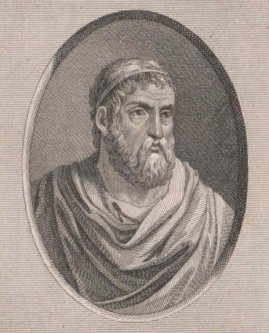
Sophocles
Tragedy with clear ethics; fate choice and speech tested in public.