
Uncle Vanya
Uncle Vanya is a play by Anton Chekhov, first published in 1897 and first produced by the Moscow Art Theatre in 1899.
Serebriakov is a retired university professor, and the story takes place on the country estate inherited by his daughter, Sonia. He and his much younger second wife, Elena, have come to stay there.
The household includes Sonia; her uncle Vanya; Vanya’s mother, Maria; the nurse Marina; Teleguin, an impoverished landowner nicknamed Waffles; and a hired workman. Their routine has long centered on maintaining the estate.
For years, Vanya and Sonia have dedicated themselves to managing the estate and sending its income to Serebriakov, whom Vanya once admired as a distinguished scholar.
Their presence disrupts the household, and Vanya concludes that the professor is not the great intellectual he once imagined. He despairs at having spent his life serving his self-important brother-in-law while also struggling with his attraction to Elena.
The play examines wasted time, disappointed hopes, and the characters’ longing for lives they cannot attain. Chekhov's description of the characters' feelings of ennui and tedium is masterful.
This digital edition of the play Uncle Vanya in PDF, ePUB and MOBI is based on Project Gutenberg's translation.
Your download has started
PDF · Uncle Vanya — didn't start? Download again
Also available: PDF · EPUB · MOBI · Read online
Read it on a Kindle
Download the EPUB and send it with Amazon's Send to Kindle (web, app, or your kindle.com email). Modern Kindles accept EPUB directly — no conversion needed.
On iPhone or iPad
Tap the downloaded file, then "Open in Books". It opens in Apple Books, with your reading progress synced across your devices.
On Android
Open the file with Google Play Books or any EPUB reader (ReadEra, Moon+ Reader). PDFs open in any viewer.
On your computer
PDFs open anywhere. For EPUB, try Calibre or Thorium Reader — both free and excellent.
Public domain (US)·No sign-up·DRM-free·Real text, not scans
Copyright note. Uncle Vanya by Anton Chekhov is believed to be in the public domain in the United States only. It may still be copyrighted in other countries. If you are not in the United States, please check your local laws to ensure this eBook is in the public domain in your country before downloading Uncle Vanya in PDF or EPUB.
- Pages
- 50
- Reading time
- 1 hour 23 minutes
- Pace
- Intermediate
- First published
- 1897
- Language
- Russian
- Downloads
- 3,552
129 years later, still timely
Why Read Uncle Vanya in 2026?
Burnout, stalled projects, climate fatigue—the vocabulary changed; Chekhov’s ache didn’t. Uncle Vanya sits with squandered time and asks what renewal would cost. Quiet, humane, and bracing, it invites trading complaint for attention and rebuilding meaning where you stand.
Today's connection
Set on a struggling estate, the play links personal exhaustion to care of land and people. Its pauses reward slow attention while its questions—what matters, for whom, at what cost—land with fresh urgency.
Care, not spectacle
Maintenance as a moral act.
Time’s friction
Regret, patience, and repair.
Listening ethic
Between lines, change begins.
These collections include Uncle Vanya



Share this book
About the author
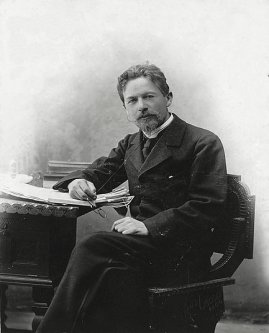
Anton Chekhov
Short forms of human truth; restraint, detail, and sudden light.
If this one stays with you…
Romeo and JulietWilliam Shakespeare
A Midsummer Night's DreamWilliam Shakespeare
HamletWilliam Shakespeare
MacbethWilliam Shakespeare
From Uncle Vanya
What must human beings be, to destroy what they can never create?
God alone knows what our real business in life is.
A woman can only become a man's friend after having first been his acquaintance and then his beloved—then she becomes his friend.
Men may forget, but God will remember.
And the existence is tedious, anyway; it is a senseless, dirty business, this life.