Start here
Dracula
Told entirely in letters, diaries and newspaper cuttings, and the picture only exists once Mina types them up and puts them in order — which is also how they find him. Stoker took the name from Vlad Țepeș and very little else.
Collection · Curated by Alice
The Victorian ghost story was written for reading aloud at Christmas, which is why so much of it is short and so much of it withholds. A Christmas Carol calls itself a ghost story of Christmas in its own subtitle, and the tradition it belongs to runs from there to the Edwardian collections further down.
The Gothic novels here do something else: they put the horror in a building. A house on cursed ground, a hotel suite in Venice, a cliff-side dwelling over a chasm in Ireland. Three of the novels below have the word House in the title, and that is not a coincidence.
If you have twenty minutes, read The Monkey's Paw. If you have an evening, read Carmilla, which was doing this a quarter of a century before Dracula.
The range runs from 1843 to 1921, which is wider than "Victorian" strictly allows. The Edwardian writers — M. R. James, Hodgson, Blackwood — are here because the form they were writing in is the one Victorian readers built, and cutting them at 1901 would break the story this page tells.
Poe and Lovecraft are not here, and that is not a judgement about quality or about nationality — Hawthorne and Chambers are as American as Poe and both are on this page. It is that those two have their own readers and their own routes into the site, and a page that tries to hold everything holds nothing.
Titles still under copyright in the United States are listed with the year each becomes free, and never offered. That year is calculated from the date of first publication, and the admin flags any that have already arrived — which is how a 1930 collection stayed on this page as a future release seven months after it stopped being one.
Public-domain status is checked against United States copyright terms: works published in 1930 or earlier are already free, and anything later enters the public domain on the first of January after its ninety-fifth year.
Five essential works, free to download
The five that define the two traditions on this page: the vampire novel, the portrait, the moors, the sensation novel and the double. Between them they account for most of what people mean by Gothic.
Start here
Told entirely in letters, diaries and newspaper cuttings, and the picture only exists once Mina types them up and puts them in order — which is also how they find him. Stoker took the name from Vlad Țepeș and very little else.
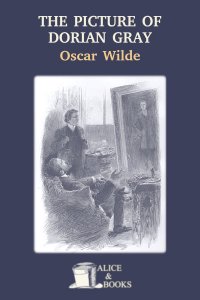
Basil paints him, Lord Henry talks to him, and the portrait absorbs the damage. It ran in a magazine first; Wilde expanded it for the book a year later, after the reviews called it immoral.
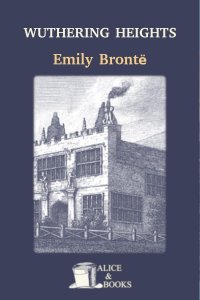
Two houses on the Yorkshire moors and two generations that never get out from under the first one. Emily Brontë's only novel, and the reviewers of 1847 did not know what to do with it.
A woman in white on a road at midnight, and then six hundred and seventy pages of statements assembled to prove what was done to Laura Fairlie. One of the books that made the sensation novel the thing everyone was reading.
Seventy-two pages, and structurally a detective story: Utterson spends almost all of it working towards something every reader now knows before opening it.
Novellas and stories, twenty to 126 pages
The Victorian ghost story was built for one sitting. Everything in this section can be read in an evening, and the shortest is twenty pages.
20 pages
Three wishes, and the horror is entirely in what the second one implies and the story refuses to show you. Twenty pages, and the shortest thing on this page.
Its full title calls it a ghost story of Christmas, and it is one: four hauntings in a single night. The first printing sold out before Christmas Eve of 1843.
Before Dracula
A quarter of a century before Stoker: a girl in an isolated Styrian castle with her father, a guest who arrives after a carriage accident, and an illness nobody will name. Le Fanu was there long before Stoker, and in ninety-two pages.
A governess becomes certain that her dead predecessor and the master's valet have come back for the children in her care. James never confirms that they are there, and readers have been arguing about it for over a century.
Longer books, and the ones where the horror lives in a building rather than in a person. Three of the seven have House in the title.
A house built on land taken from a man condemned for witchcraft, who cursed the family as he died. Hawthorne called it a Romance in his preface, which was his way of asking not to be held to plausibility.
Opens with a skull dug up in a churchyard at Chapelizod, outside Dublin, and takes seven hundred and fifty pages to explain it. Le Fanu at his most digressive, and the book Joyce kept returning to in Finnegans Wake.
A Venetian palazzo is refitted as a hotel and one suite is wrong. Collins keeps the reader unable to decide between a haunting and a fraud until very late, which is the whole trick.
Cosmic horror before Lovecraft
A found manuscript, a house over a chasm in the west of Ireland, and things that climb out of it. Then the narrator falls through deep time and watches the sun burn out.
Framed as an investigation, which is why it holds: Leroux writes as though the Paris Opera really did have a man living beneath it. Erik is an architect and an illusionist before he is a monster.
A ship the narrator had heard odd stories about before he signed on. Hodgson had spent years at sea and it shows in every watch and every rope; the horror arrives through the rigging.
The latest book here
Haggard puts his two most successful characters in the same book: Allan Quatermain goes looking for Ayesha, who has been waiting about two thousand years. Published in 1921, eight years later than any other book we can actually offer here.
Where the English ghost story was actually made. James and Blackwood published in collections, not novels, and the form rewards it: each of these is six to ten chances to be unsettled rather than one long approach.
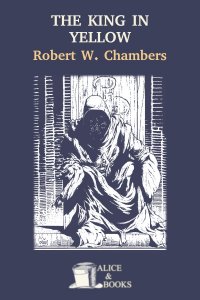
Four linked stories about a play that unhinges anyone who finishes it, followed by several that are not horror at all. Lovecraft borrowed its names and its symbols.
Start here for ghost stories
Scholars in libraries and cathedrals disturb something in a manuscript, an engraving, a whistle dug out of a ruin. James built the English ghost story on restraint: you are shown very little and it is worse.
Blackwood's first book. In the title story two people agree to sit out a night in a house that is known to be wrong, and almost nothing happens to them, which is the entire method.
An occult detective who investigates hauntings with ritual circles and an electric pentacle. Some cases turn out to be frauds and some do not, and Hodgson never signals which kind you have started.
What we cannot offer yet, and the year we can
Six books from the 1930s, the last great decade of the English ghost story. Each date below is derived from the year of first publication rather than typed in, and the admin flags any title whose year has already arrived.
Unlocks January 2027
Burrage published this collection as "Ex-Private X", the name he had used for his war memoir, keeping it apart from the magazine fiction he lived on.
Unlocks January 2027
Sinclair was a novelist and a suffragist who wrote supernatural fiction alongside the realist work she was known for.
Unlocks January 2028
Wakefield is the closest the 1930s came to a successor to M. R. James. Most of what is in here first appeared in his collections of 1928-31, which are already free.
Unlocks January 2029
Sixteen tales, including "Tarnhelm" and "The Silver Mask", by a novelist far better known in his lifetime than now.
Unlocks January 2029
Late Machen: the little people, paranoia and a creeping sense that the ordinary world has been substituted for another.
Unlocks January 2030
Benson wrote the Mapp and Lucia comedies and, in parallel, some of the nastiest ghost stories in English.